How Much Does It Cost to Install a Whole House Water Filtration System in Hermitage?
The price comes down to your water, the materials inside the system and how easily we can reach your main line.
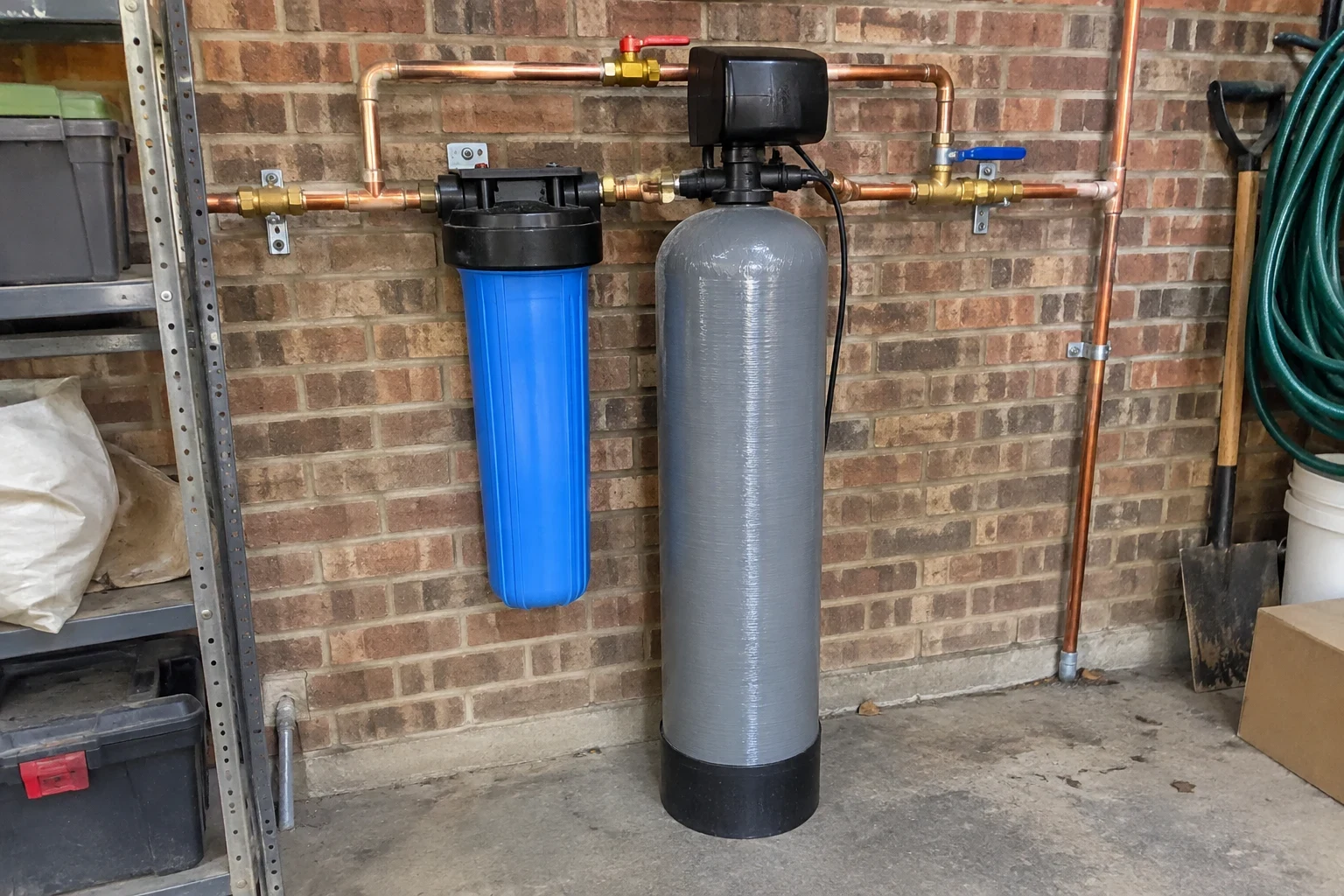
How much should it cost to install a whole house water filtration system?
The cost of a whole house water filtration system depends on what your water needs removed, the type and size of system that does it, and how easy your main line is to reach. A basic sediment and carbon setup costs much less than one with specialty media, a softener or UV. For a free estimate, reach us at (615) 395-6422.
What does your water actually need filtered?
This question sets the budget before anything else. City water in the Nashville area is treated and safe to drink, but many homeowners still notice a chlorine taste or smell, white scale on fixtures and spotting on glassware. Middle Tennessee sits on limestone, so moderately hard water is common. A home on a private well is a different case, with possible sediment, iron or bacteria.
We start by looking at your water and asking what bothers you about it. A household that only wants better-tasting water from every tap needs a much simpler system than one dealing with scale buildup in a new water heater. Paying for filtration your water doesn't need is the easiest way to overspend, so we size the system to the problem you have.
How system type and materials change the price
Whole house systems come in a few basic designs. The materials inside them, and the housings that hold them, account for much of the difference between one quote and another.
Tank and housing materials matter more than they seem to. Fiberglass-reinforced polyethylene tanks are light, don't rust and hold up well indoors. Stainless steel housings cost more but tolerate bumps in a busy garage and look clean next to copper pipe. Clear plastic cartridge housings are the least expensive and let you see when a filter is dirty, though they need care when they are opened and should be kept out of direct sun. Control valves with brass bodies generally outlast all-plastic valves, which shows up in the price.
- Cartridge systems: a sediment filter followed by a carbon block in standard housings. Lowest upfront cost, with filters changed on a schedule.
- Carbon tank systems: a larger tank of granular or catalytic carbon that treats water for years before the media needs replacing. Catalytic carbon handles chloramine better than standard carbon and costs more.
- Water softeners: ion exchange resin that removes hardness minerals. Often paired with a carbon tank, which adds a second tank and a brine tank.
- UV disinfection: an ultraviolet lamp in a stainless chamber, mainly for well water. Needs an outlet nearby and a sediment filter ahead of it.
What installation details add to the cost?
The system goes on your main water line, just after the shutoff valve, so every faucet, shower and appliance gets treated water. How easy that point is to reach makes a real difference. A main line that enters in an open garage with room on the wall is a straightforward job. One that comes up in a tight crawlspace or behind a finished wall takes more time and more fittings.
Your pipe material matters too. Copper, PEX and CPVC each need their own fittings and transitions, and older galvanized pipe near the main may need attention before a new system is connected to it. We install a bypass valve so you can keep water running during filter changes, and backwashing tank systems need a drain and often an outlet close by.
Placement also has to account for winter. Our cold snaps can freeze equipment in an unheated garage or crawlspace, so sometimes the right spot costs a little more to plumb but protects the system for years. If a permit is required for the work, we pull it and include it in the estimate.
What does it cost to keep a system running?
The upfront price is only part of the picture. Cartridge systems are cheaper to buy, but filters need changing on a regular schedule, often every few months depending on your water and how much your household uses. Tank systems cost more at the start, yet the carbon media can last for years before replacement.
Softeners use salt and some water during regeneration. UV systems need a new lamp roughly once a year and a clean quartz sleeve. When we quote a system, we explain these ongoing costs too, so you can compare options over several years and not only on installation day.
How we put together your estimate
We come out, look at your water and the spot where your main line enters, and talk through the options that fit. You get a written estimate that lists the system, the materials, the plumbing work and any permit, line by line. If a simpler setup will do the job, we will tell you.
Estimates are free. We offer financing options and accept all major credit cards and cash. On install day we protect the floor around the work area, shut the water off for as short a time as we can, flush the new system and clean up before we leave.
More questions about whole house filtration
Something not covered here? (615) 395-6422
Will a whole house filter lower my water pressure?
A properly sized system should cause very little pressure drop. Problems usually come from undersized housings or a clogged cartridge, which is why we match the system's flow rate to your home's plumbing and fixture count.
Does filtration help a tankless water heater?
Yes, especially a softener or scale-reducing system ahead of it. Hard water leaves mineral deposits on the heat exchanger, and treated water helps a tankless unit run efficiently for longer. We can talk through both if you are planning a tankless water heater installation.
Do I still need a drinking water filter at the kitchen sink?
Often not, if the whole house system includes good carbon filtration. Some homeowners add a small under-sink system for an extra polish on drinking water, and that is an easy add-on.
How long does installation take?
Most installs are finished within a day. Your water is off only for the part of the job where we cut into the main line and connect the system.
Get a clear price for cleaner water
Tell us what you notice about your water and where your main line comes in. We will come out, check your setup and give you a free written estimate with the materials spelled out. We also answer the phone around the clock for plumbing emergencies.