ServicesWater Filtration
Whole Home Water Filtration in Hermitage
We treat your water once, right at the main line, so the kitchen, the showers and the washing machine all draw from the same filtered supply. First we test what your water carries, then we explain the media, tank and housing options in plain terms.
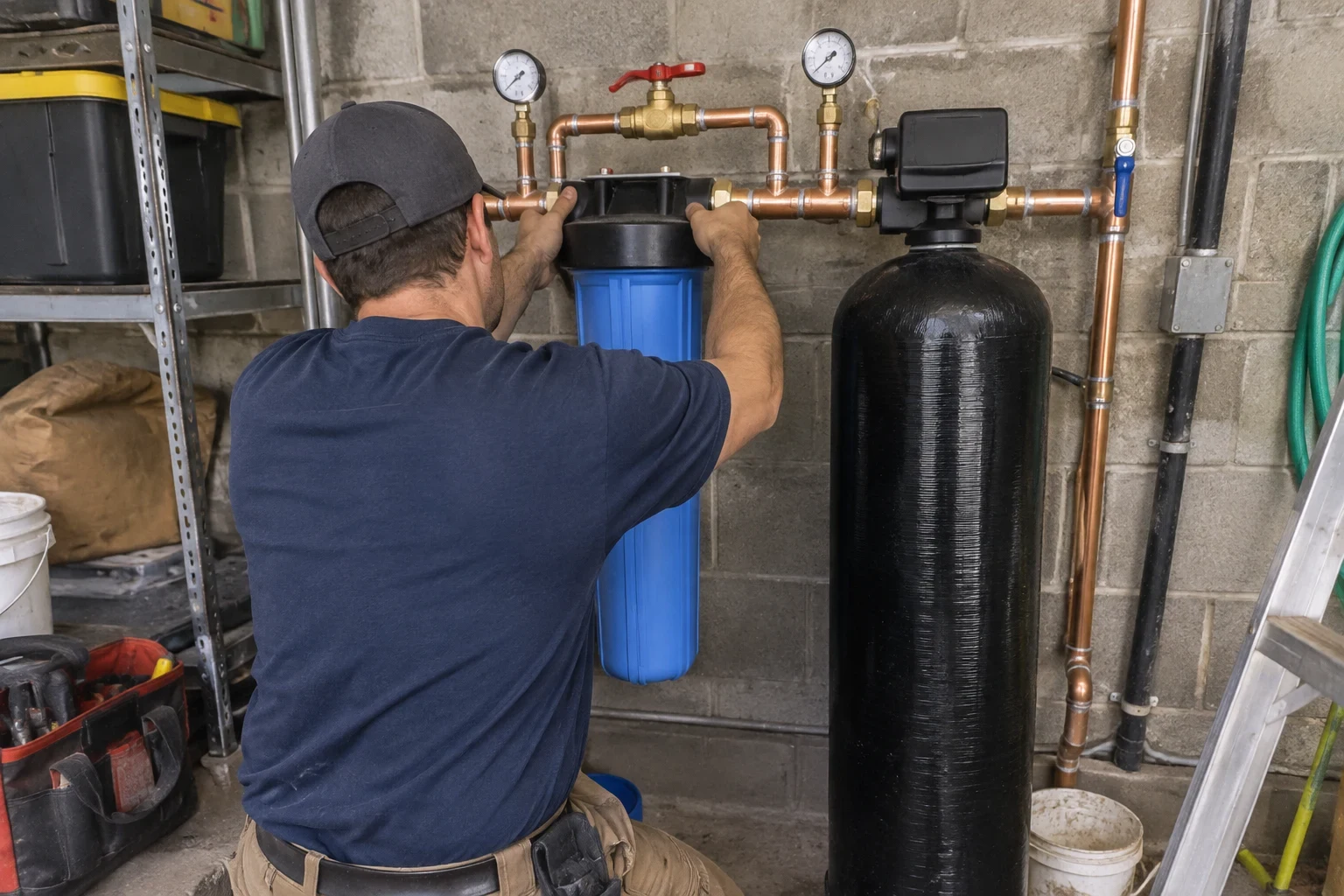
Treated water from the point of entry onward
A pitcher or a single cartridge under the sink only helps one faucet. A whole home system handles the water as it arrives, before it splits off to every room. You notice it first in the shower, where the chlorine smell fades, then on glass doors that spot less, and over time in a water heater and fixtures carrying less scale.
Homes around Hermitage often see two separate issues: moderately hard water and the taste of city disinfectant. Each needs its own media. Carbon does not soften, and a softener does little for taste. We tell you which issue your water has, then size equipment for that, not for the biggest unit available.
What you end up with is a quiet setup that needs only simple upkeep, with tidy piping and properly supported tanks you will not mind seeing in the garage.
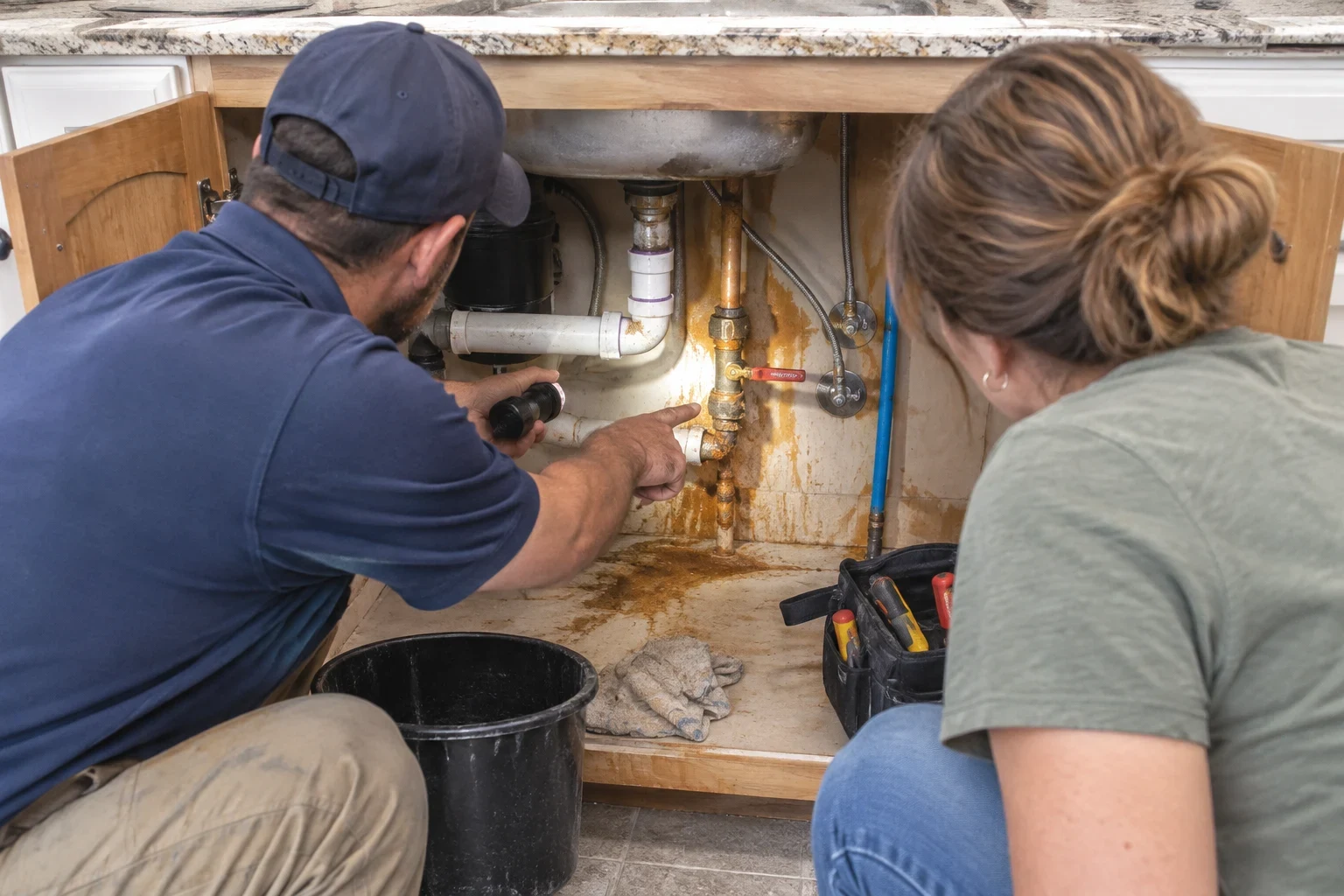
What the installation includes
- 01
A water test first
We check hardness, chlorine level, sediment and pH at your home. The results decide the media, so you are not paying for treatment your water does not need.
- 02
Sediment prefiltration
A cartridge housing catches sand, rust flakes and grit before they reach the main tank. Clear housings let you see when a cartridge is loaded; opaque ones resist algae in sunny spots.
- 03
Main media tank
Catalytic carbon handles chlorine and chloramine taste and odor better than standard carbon. Where hardness is the concern, we discuss softener resin or a salt-free scale reduction media and the trade-offs of each.
- 04
Bypass valve and shutoffs
Every system gets a bypass so water keeps flowing while media or cartridges are changed. Shutoffs on both sides make service simple for years to come.
- 05
Clean connections
We tie into your existing copper, CPVC or PEX with fittings matched to the pipe, support the tanks properly and route any drain line where it belongs.
- 06
A walkthrough at the end
We show you the bypass, how to read the pressure gauges and when each cartridge or media bed is due, so maintenance never feels like guesswork.
Questions about Water Filtration?
Call(615) 395-6422When filtering the whole house makes sense
Chalky buildup on faucets
White scale on shower heads, taps and glass is a hard water sign. Those minerals are settling inside your water heater as well.
Chlorine you can smell in the steam
City disinfectant keeps the mains safe, but plenty of people would rather not breathe it during a hot shower.
Sand in faucet screens
Grit or rust flecks in aerators usually start on the supply side. A sediment stage catches them before they spread through the house.
Appliances wearing out early
Water heaters, dishwashers and washers that scale up ahead of schedule often point to water harder than they were designed for.
Stiff towels and dry skin
Soap rinses away poorly in hard water, and the residue shows up in laundry and on skin.
How we install your system
- 1
Test and review
We run the water test, find where the main line comes in, and go through the media and tank choices with your results on hand. Nothing is scheduled until you have a written estimate.
- 2
Protect and drain
On the day, we cover the floors along our path, close the main shutoff and empty the pipes near the entry point. Your water is typically off for just part of the day.
- 3
Place and plumb
We level the tanks on a firm base, fit the bypass valve and pressure gauges, and connect to your piping with fittings made for copper, CPVC or PEX.
- 4
Rinse and inspect
Fresh media is rinsed until the water runs clear. We test pressure at the fixtures, look over each joint, tidy the area and haul away the boxes.
What moves the cost of a filtration system
We price each system from your water results and the layout of your plumbing, so two houses on the same street can end up with quite different setups. Your written estimate lists every tank, housing and valve on its own line, so you can see what each part adds. Financing options are available, and we take cash as well as all major credit cards.
- The treatment your water calls for
- A sediment stage plus carbon is the simpler, lower-cost setup. Treating hardness as well means a second tank and its own media, which raises the total.
- Bathrooms, people and flow rate
- A larger household pulls more water at once. A tank that is too small for that demand costs pressure at the showers, so we size it to the way your home really runs.
- Tank and housing material
- Most tanks are fiberglass-reinforced and work well indoors. Stainless steel housings cost more but hold up better in visible or outdoor spots, and control valves vary in build quality too.
- Where the system will sit
- When the main line is exposed in a garage, the install is direct. Extending pipe to a better location, or adding a drain and an electrical outlet nearby, takes more labor.
Whole home water filtration questions
Will treating all the water coming in reduce pressure at my showers?
When the tank is matched to your flow, the drop is slight and most people never notice it. Real pressure problems tend to come from a tank that is too small or a sediment cartridge that is overdue. We size for your household and show you the gauges, so a loaded cartridge is easy to spot.
Is a water softener the same thing as a filter?
They do different jobs. A softener exchanges calcium and magnesium for sodium or potassium, and carbon media takes out chlorine taste and smell. Some homes need one stage, many benefit from both, and your test results show which applies to you.
How often does the media need replacing?
Sediment cartridges usually need changing somewhere between a few months and a year, depending on how much grit your supply carries. Carbon media lasts several years before the tank is refilled. We leave you a schedule built around your system and how much water your home uses.
Does filtration help a tankless water heater?
It does. Scale builds quickly on a tankless heat exchanger, and reducing hardness before the water reaches it means less frequent descaling. Our tankless water heater installation page covers how the two systems work together if you are planning a new unit.
Does it remove fluoride?
Ordinary carbon media takes out very little fluoride. If you want it reduced, we can discuss a reverse osmosis unit under the kitchen sink for drinking water, running alongside the whole home system.
Find out what your water actually needs
We will test your water, explain the media options and give you a written estimate at no cost. For anything urgent elsewhere in your plumbing, our phone is answered 24/7.