ServicesTankless Water Heaters
Tankless Water Heater Installation in Hermitage, TN
We fit gas and electric tankless units to the hot water demand your home really has, measured fixture by fixture. Before a bracket goes on the wall, we compare heat exchanger metals, vent pipe choices and fuel supply with you, so the reasons behind the unit are clear.
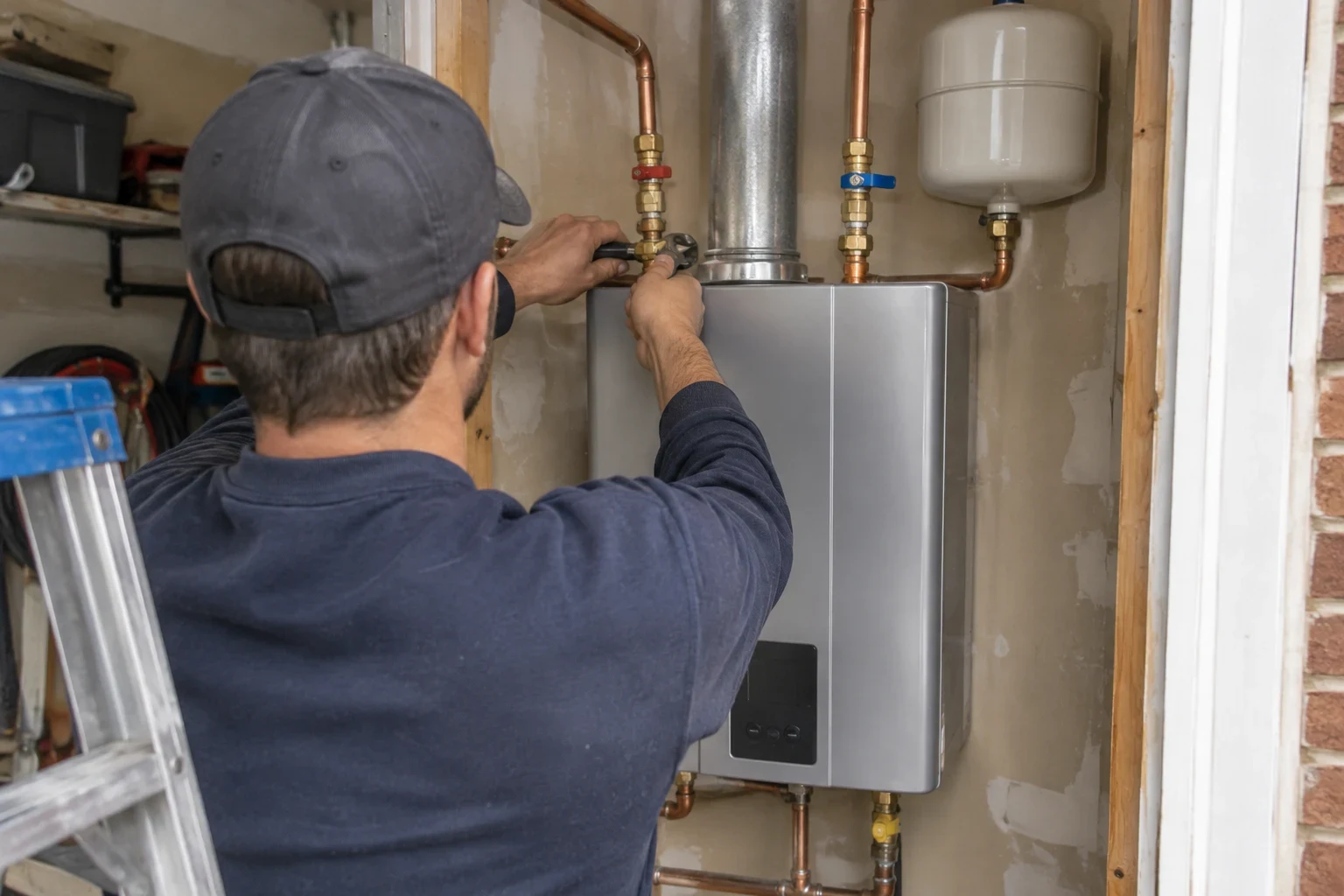
Endless Hot Water, Chosen With Care
A tankless water heater heats water on demand as it passes through, rather than holding 40 or 50 gallons at temperature day and night. You gain floor space, and the lukewarm shower after a heavy laundry day goes away. The switch also asks more of the systems feeding it. Gas models sometimes require a wider supply line and a different vent, and electric models can demand substantial panel capacity.
The choices that shape the result come down to materials. You can choose a copper or stainless steel heat exchanger. Condensing models exhaust through PVC, and non-condensing models rely on stainless flue pipe. We compare these with you, describe how each handles mineral scale and constant heating and cooling, and recommend what fits your home, not simply the priciest unit we carry.
What Our Tankless Installs Include
Sizing by flow rate
We tally your fixtures and ask when hot water use peaks in your home. Capacity is figured in gallons per minute against the temperature of your incoming water, which drops noticeably during a Middle Tennessee winter.
Heat exchanger guidance
Copper gives up heat fast and is simple to service. Stainless steel handles the acidic condensate of high-efficiency models and generally copes with hard water better over the years. We tell you which suits the model you are considering.
Venting to the manufacturer's spec
A condensing model exhausts through PVC or polypropylene and needs a line to carry off condensate. A non-condensing model requires a stainless steel flue. We take the shortest safe path outdoors and seal each opening in the wall.
Gas or electrical supply checked
At full fire, a tankless gas heater burns much more fuel than a tank model. Before we suggest a unit, we confirm the gas line and meter can carry it, or check panel amperage for an electric model.
Isolation valves for service
A service valve kit goes on the hot and cold connections. With it, a small pump can flush the heat exchanger each year and the pipes never need to be cut.
Removal and cleanup
We drain the old tank, disconnect it and take it with us. Drop cloths protect the floors along our path, and the work area is left clean.
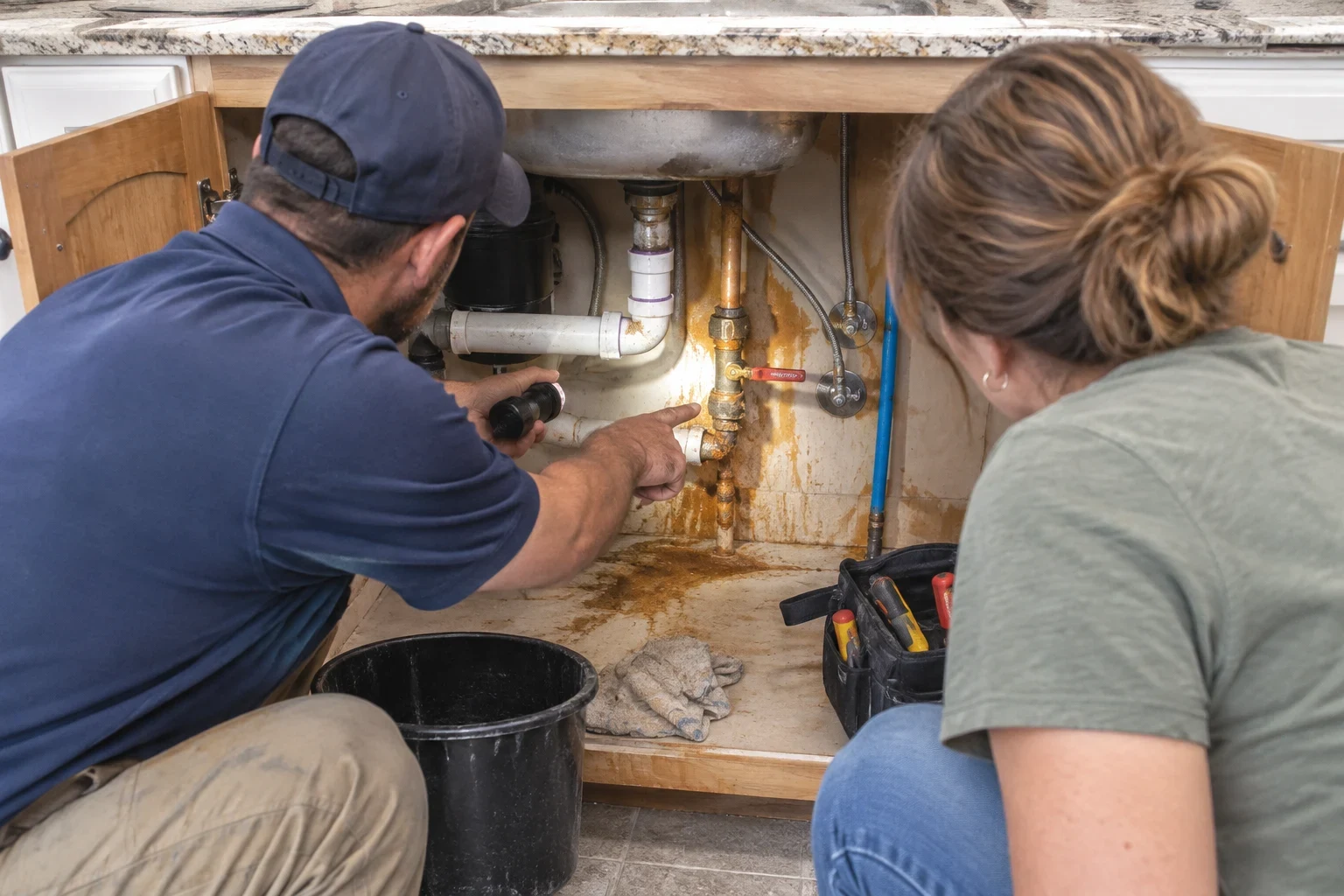
Signs It Is Time to Go Tankless
- Your tank is past its prime
- Conventional tank heaters tend to wear out somewhere around ten years. If yours is close to that age, planning the change now is calmer than scrambling after it quits.
- Hot water runs out too soon
- A string of showers or a deep soaking tub can empty a tank quickly. A correctly sized tankless heater keeps supplying hot water while your usage stays inside what it is rated to deliver.
- Discolored water or popping sounds
- A brownish tint at the hot tap and rumbling from the tank signal rust and sediment buildup. Each tells you the tank is breaking down from within.
- Water pooling under the tank
- Moisture around the base generally means the tank has given out. Replacement is the only fix, which makes it a sensible time to weigh tankless choices.
- You need the space back
- A tankless heater hangs on the wall and is roughly the size of a carry-on bag. That can open up a closet, part of the garage or a corner of a finished basement.
How Installation Day Runs
- 1
Look and listen first
We visit, check your current heater, gas or electric service and venting route, and ask how your household uses hot water. Then we explain the material and model options in plain terms.
- 2
Written estimate
You get a line-item estimate that spells out the unit, venting, gas or electrical work and haul-away. Nothing is added later without talking to you first.
- 3
Swap the equipment
On install day we shut off water and fuel, drain and remove the old tank, mount the new unit and run supply lines, venting and the condensate drain. Most homes are without hot water for part of a single day.
- 4
Permit and testing
We pull the permit where one is required, test gas connections for leaks, fire the unit and check temperature at several fixtures.
- 5
Walkthrough
We show you the controls, the service valves and how the annual flush works, so you know how to look after the heat exchanger.
What Shapes the Price of a Tankless Install
Going tankless usually costs more than trading one tank for another, because the fuel supply and the vent often have to change too. We set a price only after seeing your home, and the written estimate breaks out each part of the job. Financing options are available. We accept all major credit cards and cash.
- Fuel type
- A gas model frequently calls for a bigger line from the meter to the heater. An electric model may need dedicated circuits or even a panel upgrade, and that electrical work can cost more than the heater.
- Condensing versus non-condensing
- Condensing models carry a higher equipment price, yet their plastic vent pipe is cheaper to buy and run. Non-condensing models are less expensive to purchase but require stainless steel venting.
- Capacity and exchanger metal
- A higher flow rating or a stainless heat exchanger pushes the equipment cost up. Because we size to your real demand, you are not paying for output you would never draw.
- Where the unit goes
- Mounting it in the spot the old tank occupied keeps labor down. A new location, or a long vent run through finished walls, adds hours and material.
Tankless Water Heater Questions
- How long does a tankless installation take?
- A straightforward swap is usually done within a single working day. If the job involves running new gas pipe, upgrading the panel or moving the heater, it takes longer, and the estimate says so up front. We time the shutoff to keep your hot water outage as brief as possible.
- Will a tankless heater lower my energy bills?
- In most homes it reduces water heating costs, since there is no tank being held at temperature all day. The size of the savings depends on fuel, the model's efficiency and how your family uses hot water. We give you a realistic estimate instead of a sales pitch.
- Is hard water a problem for tankless units?
- Mineral scale is what wears down a heat exchanger. Flushing the unit once a year through its service valves keeps buildup under control. Where scale is heavy, we may recommend adding whole home water filtration or a softening stage ahead of the heater.
- Should I pick copper or stainless steel?
- Copper moves heat well and shows up mostly in non-condensing models. Stainless steel holds up better against acidic condensate and mineral scale, so most condensing models use it. Our recommendation depends on the model and your water, and we walk you through the reasoning.
- What happens if my current tank gives out first?
- Our 24/7 emergency plumbing service covers that. If the tank fails late at night or leaves water across the utility room floor, phone us and we will shut the water off, then go over replacement choices with you.
Plan Your Tankless Upgrade
Give us a sense of the heater you have now and when your family leans on hot water hardest. We will visit, check the fuel or electrical service and the vent path, and put together a free estimate that explains each material choice.