ServicesMain Water Line Replacement
Main Water Line Replacement in Hermitage, TN
An aging service line can starve every faucet in your home or leak quietly under the lawn. We lay a new line sized for your fixtures and buried below frost depth. Before any digging, we explain copper, PEX and polyethylene so you choose with the trade-offs in front of you.
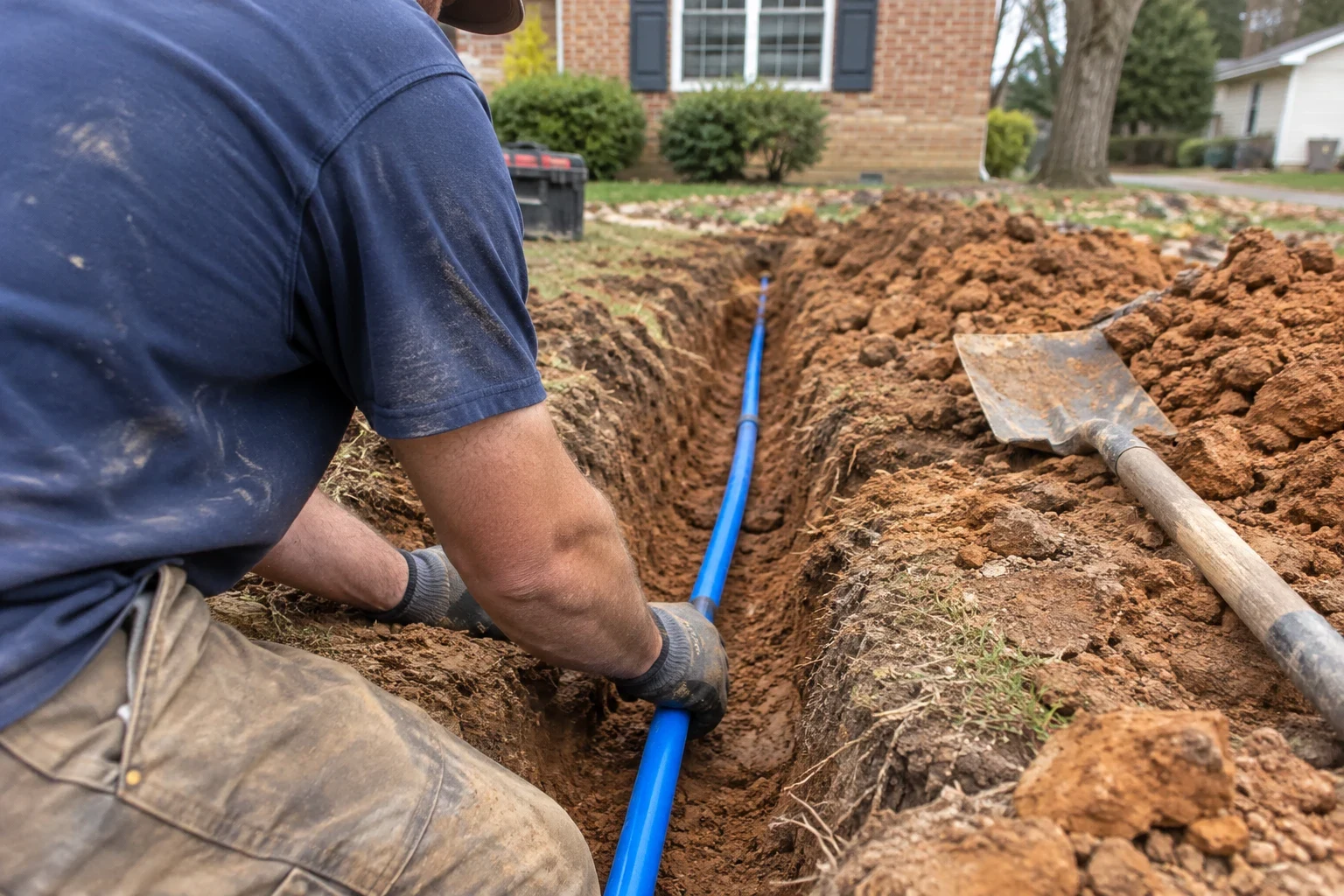
A new line from the meter to your home
Every drop of water in your home arrives through one underground pipe. It leaves the meter near the street, crosses the yard and comes up at your main shutoff valve. Many older lines are galvanized steel, which rusts from the inside until the opening narrows, or gray polybutylene, which turns brittle as it ages. Once a line reaches that point, fixing one weak spot usually just moves the trouble a few feet down the pipe.
Replacement gives you one continuous run of new pipe with fresh connections at both ends. The pipe you choose matters more than most people expect. It decides how long the line lasts, how it holds up in the rocky clay soil common to Middle Tennessee, and how much of the job can be done without a long open trench.
If water is already pooling in the yard or pressure has collapsed, we offer 24/7 emergency plumbing service to get things under control and plan the replacement from there.
What the replacement includes
- A plain talk about pipe materials
- Type K copper is rigid, long-lived and handles rocky backfill well, but it costs more and can react to very aggressive water. PEX and HDPE polyethylene are flexible, resist freezing better and can be pulled through a bored path in long runs with few joints. We tell you which we would choose for your yard and why.
- Utility locates before digging
- We have buried gas, electric and cable lines marked through the state one-call system before a shovel goes in the ground.
- Trenching or trenchless boring
- Where the path is open lawn, a narrow trench is often simplest. Where a driveway, walkway or mature tree sits in the way, we look at boring underneath so the surface stays intact.
- New connections and shutoff
- We connect at the meter and at the point where the line enters your home, and we fit a new main shutoff valve. If street pressure runs high, we will tell you whether a pressure-reducing valve makes sense.
- Testing, inspection and backfill
- The new line is pressure tested and inspected under the permit before it is covered. We backfill, tamp the soil and leave the ground graded and clean.
Signs your main line is due for replacement
Weak pressure everywhere
If every faucet and shower has slowly lost force, the problem is usually the line feeding the whole house. Narrowed galvanized pipe is a common cause.
Brown or rusty cold water
Discolored water from cold taps, especially first thing in the morning, points to corrosion inside an old steel line.
A soft or sunken strip of yard
A soggy patch, or grass that stays greener along a straight path between the meter and your home, often means water is escaping underground.
A water bill that climbs on its own
Higher usage with no change in your habits is worth a look, even if you see nothing wet.
Gray plastic or old steel at the entry
If you can see gray polybutylene or threaded galvanized pipe where the line comes through the wall or floor, the rest of the run is likely the same age.
What moves the cost
Two homes on the same street can land at very different prices for this job. Most of the gap comes from what lies between the meter and the house, and from the pipe you pick. Financing options are available, and you can pay with any major credit card or with cash.
How far and how deep the line runs
A meter set far back from the house means more pipe and more digging. Lines must sit below frost depth, which sets the minimum trench.
What sits in the path
Open lawn is the easy case. Driveways, patios, retaining walls and tree roots can make boring the better choice, which changes the equipment and the labor.
Pipe material and size
Copper costs more per foot than PEX or polyethylene. Going up a size for a larger home or added fixtures also affects the price.
Rock and soil
Limestone just under the clay is common here, and breaking through it takes time and the right tools.
Fittings and permit
A new main shutoff, a pressure-reducing valve if needed, and the permit and inspection fees are all listed on your estimate.
How the job runs
- 1
Phone call and free estimate
You call, and we set a time to come out. We check the meter, the entry point and your water pressure, and look at the path the line takes across the yard.
- 2
Pipe choice and permit
You get a written estimate with the pipe type, the route and the method spelled out. Once you approve it, we pull the permit and request utility locates.
- 3
Dig day
We shut the water off at the meter, open the trench or set up the bore, and lay the new line below frost depth. The old pipe is disconnected and either removed or left capped in place.
- 4
Connect, test and inspect
Both ends are connected, the line is pressure tested and the inspector signs off. We flush the line so the first water through your taps runs clear.
- 5
Backfill and cleanup
The trench is backfilled and compacted, extra soil and old pipe are hauled away, and we walk the yard with you before we leave.
Main water line questions
How long will my water be off?
For most homes, the water is off for part of a single day while we make the final connections. We dig and lay as much of the line as possible before shutting off the meter. We will give you a time window on the estimate so you can plan around it.
Which pipe material do you recommend?
It depends on your soil, the length of the run and how you feel about cost. Polyethylene and PEX suit long runs and boring because they come in continuous coils with few joints. Copper is a strong choice in rocky ground and lasts a very long time. We will tell you our honest pick and the reason for it.
Will you have to tear up my whole yard?
Not usually. An open trench is narrow and follows one path. Where we can bore under a driveway or landscaping, the surface between the two ends stays as it is.
Who is responsible for the pipe between the meter and my house?
Usually the water utility looks after the meter and everything on the street side of it. The stretch running from the meter up to your foundation typically falls to you as the property owner. We can confirm exactly where that boundary sits on your lot during the estimate.
Does this job need a permit?
Yes. We pull the permit and schedule the inspection, and the line stays uncovered until the inspector has seen it.
What if the line breaks at night or on a weekend?
Our 24/7 emergency plumbing service covers those hours. First we stop the flow so your yard and foundation are protected. Then we plan the replacement for the earliest time it can be done properly.
Talk through your pipe options
Tell us what you are seeing at the tap or in the yard. We will come out, look at the line and give you a free estimate with the pipe choices laid out plainly.